Shoulder Extension: What Tightens While You’re Not Looking
Everything you do happens in front of your body — and the muscles that move your arm behind it are paying the price
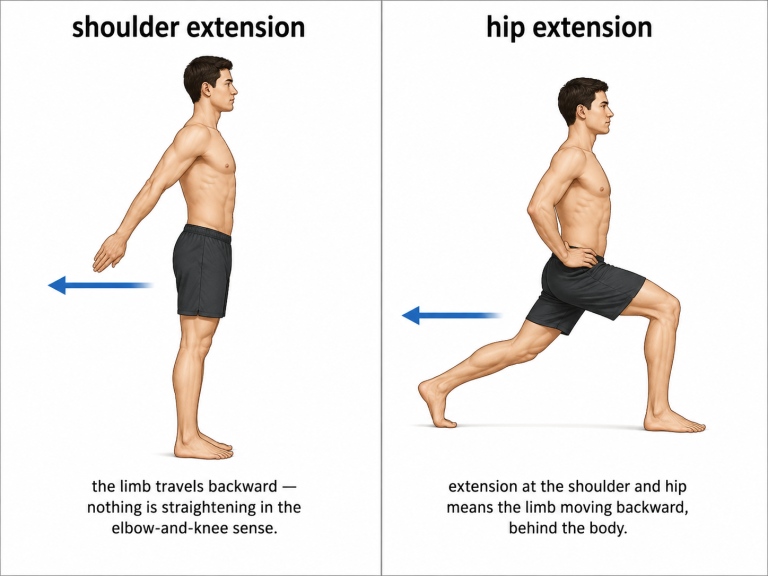
Shoulder extension is one of the simplest movements your body can make: your arm moves behind you. Defined primarily as backward movement of the arm past the midline, it requires no overhead reach and no complex coordination.
It’s also a movement many people are quietly losing.
You feel it in small moments. Reaching behind you for a seatbelt takes more effort than it should. Getting your arm into a coat sleeve requires a twist. The bottom of a push-up or dip pinches at the front of the shoulder. A yoga backbend that used to feel open now feels blocked. These aren’t dramatic injuries. They’re the surface signs of a restriction that has been building gradually, degree by degree, for years — in the structures you can’t see, on the front of the shoulder, while your attention was somewhere else.
The pattern behind these restrictions is often the same: the muscles and tissues on the front of the shoulder have shortened, the ones on the back have weakened, and the body has been compensating so long that the limitation feels normal. This article is about why shoulder extension is one of the first movements modern life erodes, what’s actually limiting it, and what to do about the cause rather than the symptom.
What Shoulder Extension Is — And How Much You Need
The movement is straightforward. Starting from neutral — your arm hanging at your side — shoulder extension is the arm moving directly backward. The muscles that produce it are the posterior deltoid, the latissimus dorsi, the teres major, and the long head of the triceps. The sternocostal fibers of the pectoralis major also contribute to extension when the arm starts in a flexed position — one of the reasons the pec major appears on both sides of this article, as both a limiter and a producer of the movement depending on where the arm begins. Normal range is approximately 45 to 60 degrees, though values vary with age, testing method, and individual anatomy.
That sounds like a modest range, and it is. But the number that matters is this: research measuring the shoulder extension required for ten common functional daily tasks found an average requirement of 46 degrees, plus or minus about five. That’s nearly the entire normal range.
Unlike shoulder flexion — where you have roughly 180 degrees of range and rarely need all of it for daily activities — extension sits right at the edge. You need almost everything you have. There’s almost no buffer. Lose 10 or 15 degrees and everyday tasks start to feel restricted. Lose more than that and the body begins to compensate in ways that create problems well beyond the shoulder.
Why You’re Losing It — The Anterior Shortening Pattern
Nearly everything a person does in modern life happens with the arms in front of the body. Typing. Driving. Eating. Scrolling. Carrying a bag. Holding a child. Hour after hour, day after year, the arms live in flexion — the opposite of extension.
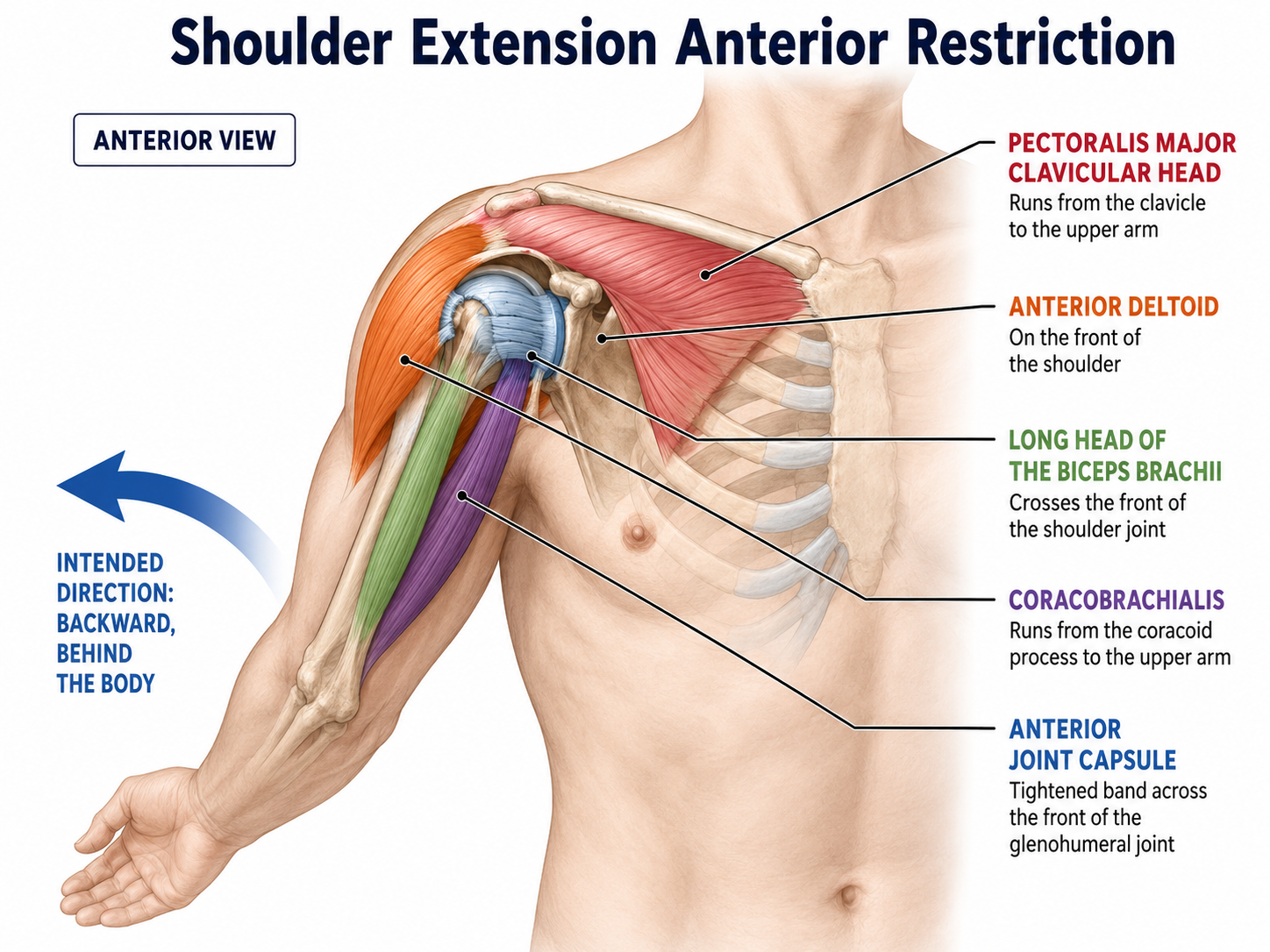
The muscles that cross the front of the shoulder joint respond to this position. The pectoralis major — particularly the clavicular head, which is the upper portion that runs from the collarbone to the arm — adaptively shortens. So does the anterior deltoid. The long head of the biceps brachii, which crosses the front of the shoulder joint on its way to the forearm, tightens. The coracobrachialis, a smaller muscle running from the scapula to the upper arm, contributes. And the anterior joint capsule — the ligamentous wrapper on the front of the shoulder — gradually loses its slack.
The result is a shoulder that flexes, adducts, and internally rotates well, because those are the positions it spends its life in. But when the arm needs to move behind the body, it runs into a wall of shortened tissue on the front. The restriction is often not in the muscles that produce extension — it’s in the muscles that oppose it.
This is not always the sole cause. Adhesive capsulitis, post-surgical scarring, labral pathology, anatomical variation, and age-related tissue changes can all limit extension independently. But for the general population — people without a specific shoulder diagnosis who notice that reaching behind them doesn’t feel right — the anterior shortening pattern is often where the problem starts.
The Compensation You Can’t See
When extension runs out at the glenohumeral joint, the body doesn’t stop. The scapula tips forward — a movement called anterior scapular tilt — to give the arm extra degrees it didn’t earn at the shoulder joint itself. Some coaching sources call this the “scapular dump,” and the name is useful as a coaching cue: the shoulder blade dumps forward to donate range the glenohumeral joint no longer has.
The reader may not feel this as a scapular event. What they feel is a pinch or pressure at the front of the shoulder — because the anteriorly tilted scapula may narrow the space under the acromion and increase loading on the biceps tendon, the subacromial bursa, and the rotator cuff. The evidence linking scapular orientation to subacromial impingement is not fully consistent, but the clinical pattern is widely observed: dips that pinch at the bottom, push-ups that catch, coat sleeves that require a contortion. The restriction is upstream, in the shortened anterior structures, and the discomfort is often downstream, where the compensation loads the joint.
This is why treating the pain without addressing the restriction often doesn’t last. The impingement, the rotator cuff irritation, the anterior shoulder tenderness — these may be secondary to the compensation rather than the primary problem. The underlying issue is the extension range that was lost while no one was looking.
Why Stretching Alone Doesn’t Fix It
If the anterior structures are short but the posterior muscles that produce extension — the posterior deltoid, latissimus dorsi, teres major, and long head of the triceps — are weak, stretching the front opens range that the back can’t control. Research suggests that ROM gains from stretching come primarily from changes in tissue stiffness and stretch tolerance, and consistent stretching programs can produce lasting improvements. But range without the strength to use it may leave the shoulder relying on the same compensations during loaded movements — dips, push-ups, backbends — where passive flexibility alone isn’t enough.
This is the same pattern the pectoralis minor creates in overhead movement: releasing a short muscle without strengthening the weak one that’s supposed to control the range it guards simply reloads the restriction.
The fix requires both sides: length on the front, strength on the back.
What Actually Works — A Layered Approach
The order matters. Release and mobilize first, stretch second, strengthen third, load fourth. Skipping ahead to loaded extension exercises with a shoulder that can’t yet get into position comfortably may increase the risk of anterior shoulder irritation or injury, especially in the presence of pain, instability, or poor tolerance.
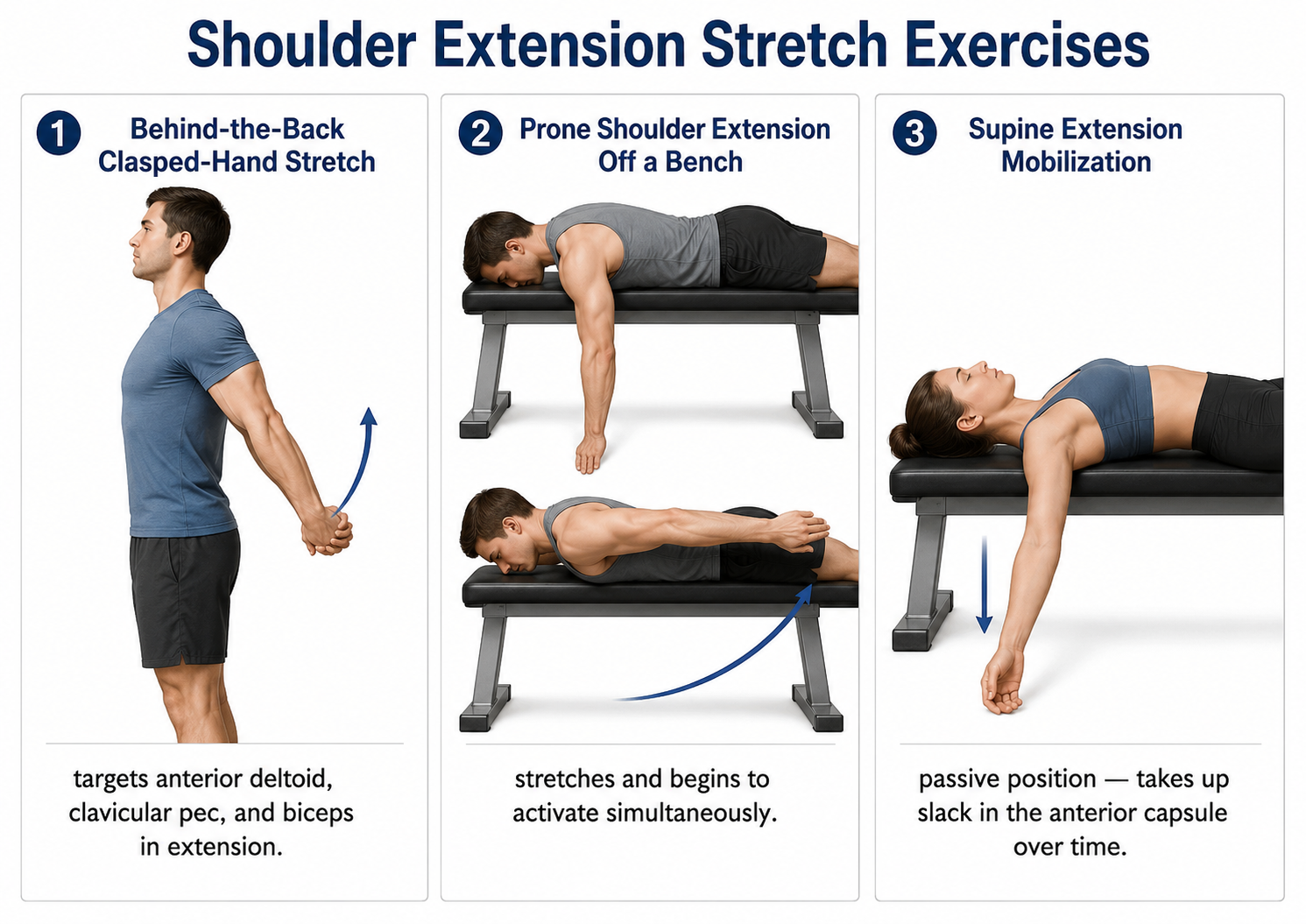
Release and mobilize the anterior structures. Soft tissue work on the pectoralis major (particularly the clavicular head near the collarbone) and the anterior deltoid. A lacrosse ball against a wall or doorframe works for these areas. Avoid pressing directly over the front of the shoulder where the biceps tendon runs through the bicipital groove — this area can be irritated by direct pressure, especially if there’s existing tendon sensitivity. For capsular restriction, a supine extension mobilization — lying face-up on a bench with the arm hanging off the edge and allowing gravity to pull it into extension — gently takes up slack in the anterior capsule over time. This is a passive position, not a forced stretch. If you suspect capsular restriction rather than muscular tightness, a physical therapist can assess and guide mobilization more precisely than self-treatment.
Stretch the front of the shoulder. A behind-the-back clasped-hand stretch — interlacing the fingers behind the body and lifting the hands away while keeping the chest up — directly targets the anterior deltoid, clavicular pec, and biceps in extension. Prone shoulder extension off a bench — lying face-down with the arm hanging and actively lifting it behind the body — stretches and begins to activate simultaneously. A doorway stretch with hands at or above shoulder height opens the pectoralis major more broadly, which supports extension indirectly by restoring general anterior shoulder length.
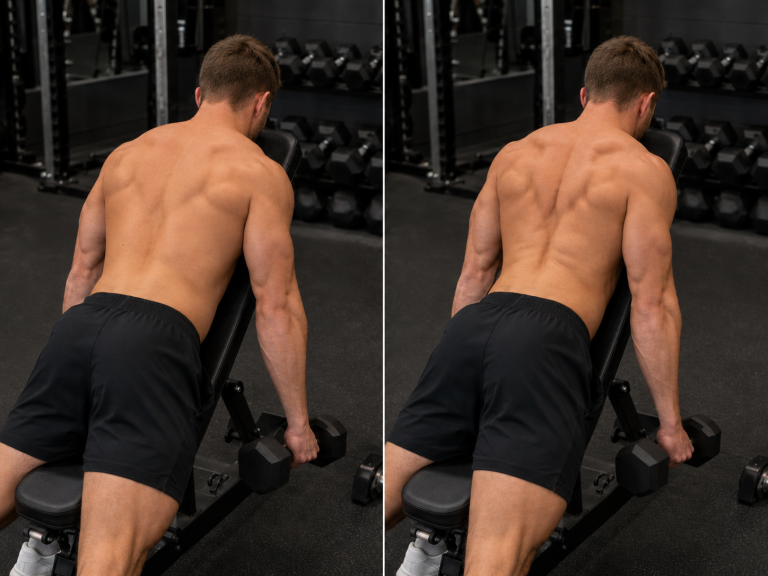
Strengthen the muscles that produce extension. The posterior deltoid and teres major need direct work in the extension direction. Prone extension lifts — lying face-down on a bench with a light weight, lifting the arm straight back behind the body — are the most specific exercise. Reverse flyes and band pull-aparts strengthen the posterior deltoid and middle trapezius in horizontal abduction, which supports extension mechanics. Separate from these, scapular stabilizer work — prone Y-raises for the lower trapezius, prone T-raises for the middle trapezius — keeps the scapula from dumping forward as extension range increases. These are supporting exercises, not extension-specific, but without them the scapular compensation persists.
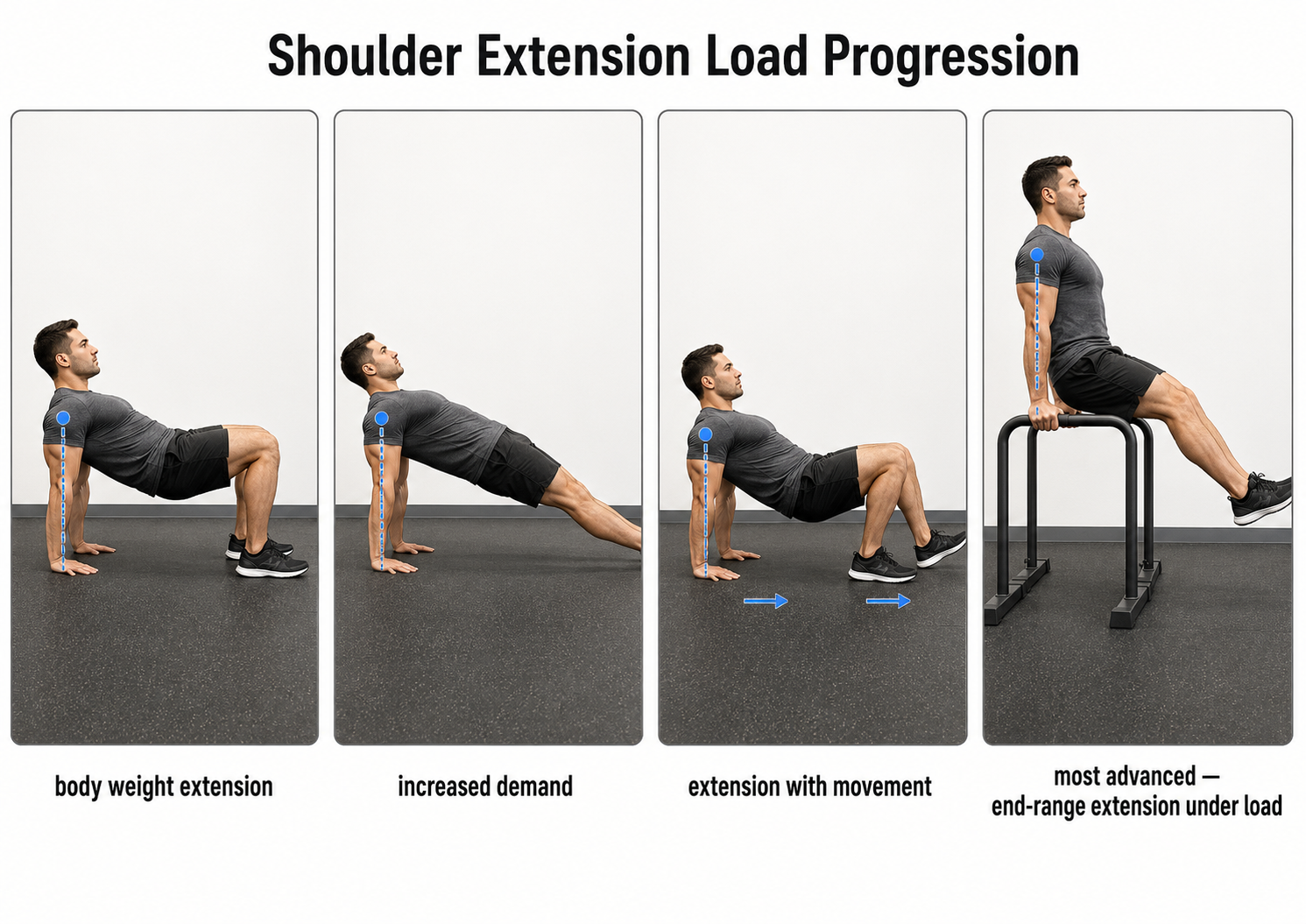
Load extension progressively. Once the range exists and the muscles can control it, load the position. Tabletop pose — hands and feet on the floor, hips lifted, shoulders behind the hands — puts the shoulder into extension under body weight. Reverse plank extends the demand. Crab walks add movement. Support holds on parallel bars or rings with the shoulders behind the hands are the most advanced progression. These help the body build strength and tolerance at the reclaimed end range.
How to Know If Shoulder Extension Is Your Problem
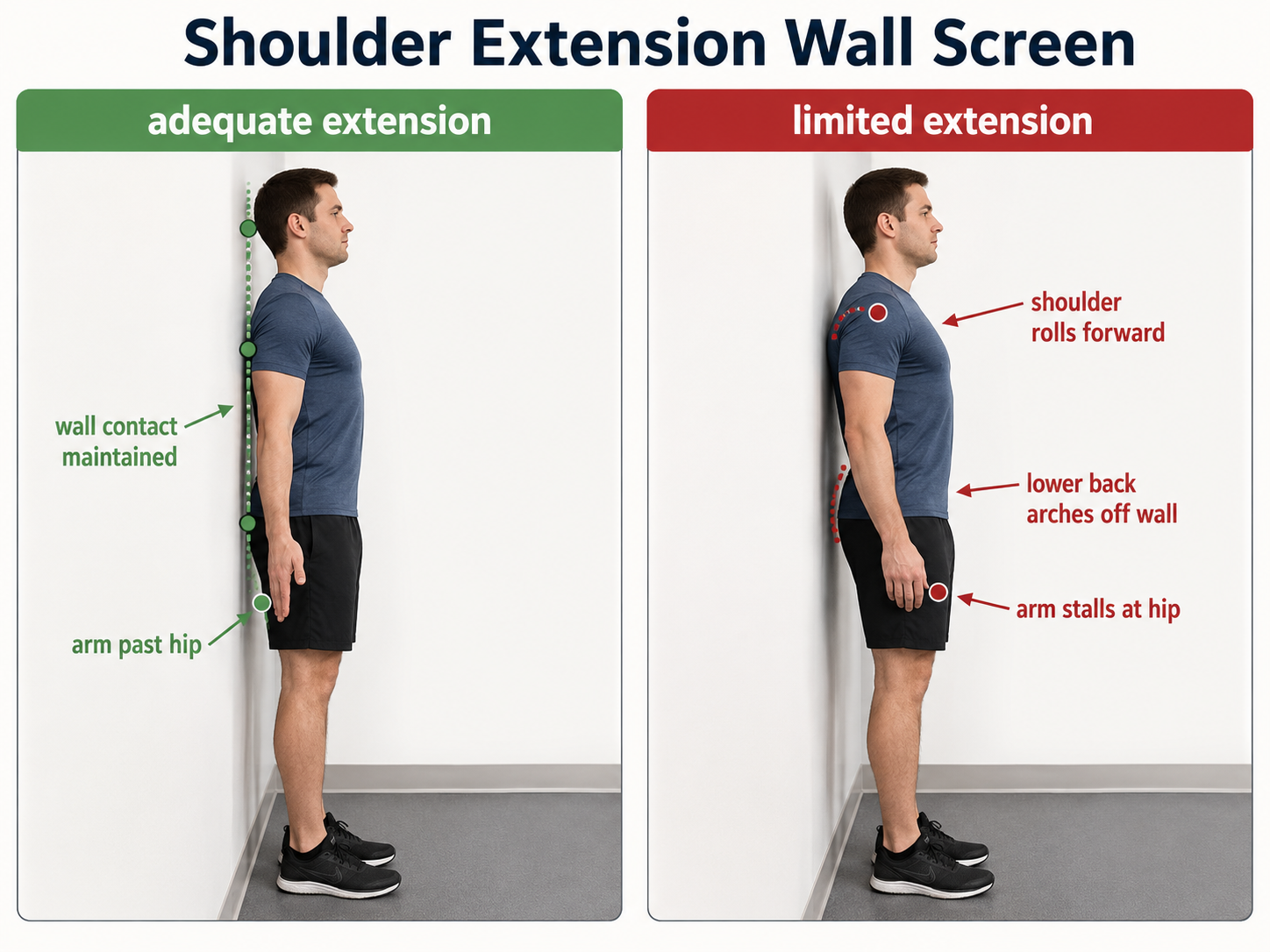
A simple self-screen can give you a rough sense of where you stand. Stand with your back flat against a wall — head, upper back, and hips touching. Without arching your lower back or letting your shoulders roll forward, reach one arm straight behind you, keeping it close to your body.
If you can get your arm past your hip with the wall contact maintained, your extension is likely adequate. If the shoulder rolls forward, the lower back arches off the wall, or the arm stalls at your hip, extension may be limited. Compare sides.
This is not a diagnostic test — it won’t tell you whether the limitation is muscular, capsular, or something else. A clinician or physical therapist can make that distinction. What the self-screen does is give you a starting point: can the arm get behind the body without the rest of the body compensating? If it can’t, extension is worth addressing.
When to See Someone
This article covers the gradual, use-related restriction that develops over time in otherwise healthy shoulders. Several situations require clinical assessment rather than self-treatment.
Sharp pain at the front of the shoulder during extension — especially under load — may indicate biceps tendon pathology. The long head of the biceps crosses the front of the shoulder joint, and extension stretches it directly. Pain that sharpens with the arm behind the body under load needs evaluation, not more stretching.
If you have a history of shoulder dislocation — particularly anterior dislocation — loaded extension positions (reverse plank, dips, ring support holds) place the shoulder near the apprehension position. Work with a clinician or qualified rehabilitation professional before loading extension after a dislocation.
If all directions of movement are restricted and getting progressively worse, that pattern suggests adhesive capsulitis (frozen shoulder), which has its own clinical trajectory and does not respond to a standard stretching program.
Shoulder extension range also decreases naturally with age. Research on over 6,000 subjects found a gradual decline in shoulder range of motion across the lifespan, with the rate of change varying between sexes. Older adults may have structural reasons for limited extension — capsular thickening, degenerative changes — that stretching alone won’t reverse. A clinician can help distinguish between tissue changes that respond to mobility work and those that require a different approach.
If symptoms persist after 4 to 6 weeks of consistent work, or if you experience radiating pain, numbness, tingling, or clicking that worsens, see a shoulder specialist.
Some situations require immediate rather than wait-and-see evaluation: acute trauma or a fall onto the shoulder, visible deformity, sudden major weakness in the arm, night pain that disrupts sleep, unexplained swelling, fever, or symptoms suggesting a dislocation. If you have had previous shoulder surgery, the mobility work in this article may or may not be appropriate depending on the procedure and healing timeline — a clinician familiar with your history should guide the progression.
Mobility work is not a substitute for medical evaluation when symptoms don’t resolve.
What Tightens While You’re Not Looking
Shoulder extension doesn’t fail dramatically. There’s no single moment where it stops working. It narrows gradually, degree by degree, as the front of the shoulder tightens around the position modern life holds it in. By the time you notice — the dip that pinches, the coat that requires a twist, the backbend that feels walled off — the restriction has been building for years.
The fix isn’t dramatic either. It’s consistent: lengthen what’s short on the front, strengthen what’s weak on the back, and load the range you’ve reclaimed so the body trusts it enough to keep it. The shoulder was built to extend behind you. The work is making sure it still can.
Shoulder extension is a fundamental movement for anyone looking to enhance their upper body strength and flexibility. This exercise involves moving the arm backward from the shoulder joint, a motion integral to various daily activities and sports. Whether you’re an athlete, a fitness enthusiast, or someone aiming to improve shoulder mobility, understanding shoulder extension can be incredibly beneficial. This article delves into the frequently asked questions, the pros and cons of shoulder extension exercises, and reviews top products to aid your workouts
Frequently Asked Questions About Shoulder Extension
1. What is shoulder extension? Shoulder extension is the movement where the arm moves backward from the shoulder joint, opposite to shoulder flexion. This motion is essential for actions like pulling or rowing.
2. Which muscles are involved in shoulder extension? The primary muscles involved in shoulder extension include the latissimus dorsi, posterior deltoids, and the teres major. These muscles work together to extend the arm backward.
3. How does shoulder extension benefit athletes? For athletes, shoulder extension strengthens the back and shoulder muscles, crucial for sports that involve pulling motions, such as swimming, rowing, and rock climbing.
4. Can shoulder extension exercises help with shoulder pain? Yes, performing shoulder extension exercises can improve shoulder stability and strength, potentially reducing pain from conditions like shoulder impingement or rotator cuff injuries.
5. How often should I perform shoulder extension exercises? It’s recommended to incorporate shoulder extension exercises into your routine 2-3 times per week, depending on your fitness level and goals.
6. What are some common shoulder extension exercises? Common exercises include the bent-over row, reverse fly, and resistance band pull-backs. Each targets the muscles involved in shoulder extension.
7. Can beginners perform shoulder extension exercises? Absolutely. Beginners can start with lighter weights or resistance bands and gradually increase intensity as their strength improves.
8. Are there any risks associated with shoulder extension exercises? While generally safe, improper form or overloading can lead to shoulder strain or injury. It’s crucial to maintain proper technique and start with manageable weights.
Pros and Cons of Shoulder Extension Exercises
Pros:
- Improves Posture: Regular shoulder extension exercises help strengthen the muscles of the upper back and shoulders, contributing to better posture.
- Enhances Shoulder Stability: By targeting key shoulder muscles, these exercises enhance shoulder stability, reducing the risk of injuries.
- Versatile Exercise Options: Shoulder extension can be performed using various equipment like dumbbells, resistance bands, or even bodyweight, making it accessible for different fitness levels.
- Boosts Athletic Performance: Strengthening the shoulder extensors is vital for sports that involve pulling or lifting, improving overall performance.
- Aids in Rehabilitation: Shoulder extension exercises are often included in rehabilitation programs to restore shoulder function and mobility.
Cons:
- Risk of Overuse Injuries: Without proper rest and recovery, repetitive shoulder extension exercises can lead to overuse injuries.
- Requires Proper Form: Incorrect form can strain the shoulder joint or surrounding muscles, potentially causing injury.
- Equipment Dependent: Some shoulder extension exercises require specific equipment, which might not be accessible to everyone.
- Limited Movement Range: Shoulder extension exercises typically involve a limited range of motion, which might not be sufficient for overall shoulder mobility improvement.
Top Products for Shoulder Extension Workouts
1. Resistance Bands Set
Description: This set includes multiple resistance levels, perfect for shoulder extension exercises. The bands are portable, making them ideal for home or gym use.
Pros:
- Versatile for different exercises.
- Easy to adjust resistance levels.
- Lightweight and portable.
Cons:
- May wear out over time.
- Can cause friction burns if not used carefully.
2. Adjustable Dumbbells
Description: Adjustable dumbbells are perfect for shoulder extension exercises like bent-over rows and reverse flys. They save space and offer various weight options.
Pros:
- Space-saving design.
- Easy to change weights.
- Suitable for various exercises.
Cons:
- Can be expensive.
- Require careful handling to avoid injury.
3. Rowing Machine
Description: A rowing machine offers a full-body workout with a strong focus on shoulder extension. It’s excellent for both cardio and strength training.
Pros:
- Provides a comprehensive workout.
- Enhances cardiovascular health.
- Low-impact exercise.
Cons:
- Bulky and requires significant space.
- Can be pricey.
4. Suspension Training Kit
Description: Suspension trainers use body weight and gravity to perform shoulder extension exercises, providing a challenging workout suitable for all fitness levels.
Pros:
- Portable and easy to set up.
- Provides a versatile range of exercises.
- Adjusts to user’s fitness level.
Cons:
- Requires anchoring point.
- Learning curve for proper use.
5. Shoulder Pulley System
Description: Designed for rehabilitation, this pulley system aids in shoulder extension exercises, helping improve range of motion and strength.
Pros:
- Effective for rehabilitation.
- Easy to use at home.
- Affordable and compact.
Cons:
- Limited to rehabilitation and light exercises.
- Not suitable for advanced strength training.
Shoulder extension exercises are a valuable addition to any fitness regimen, offering numerous benefits for strength, stability, and overall shoulder health. By incorporating these exercises into your routine and using the right equipment, you can enhance your upper body strength and prevent injuries. Remember to start slowly, focus on proper form, and gradually increase the intensity to maximize the benefits while minimizing the risks.