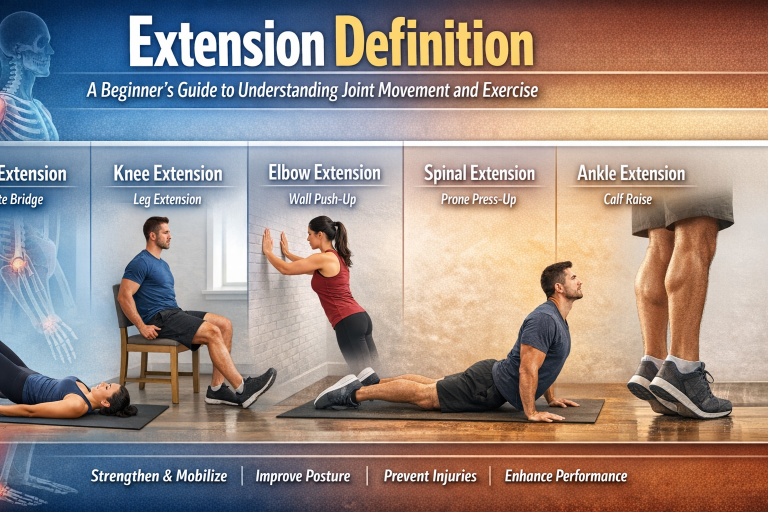
Flexion represents one of the most fundamental movements the human body performs daily, yet many people don’t fully understand what happens when they bend their elbow, knee, or spine. Whether you’re an athlete, fitness enthusiast, physical therapy patient, or simply curious about how your body moves, understanding the flexion definition is essential for optimizing movement patterns, preventing injury, and maximizing physical performance.
Flexion Definition: What Is Flexion in Anatomical Terms?
In anatomy, the flexion definition describes a movement that decreases the angle between two body parts or bones that meet at a joint. This bending motion brings the articulating bones closer together, reducing the joint angle from its neutral or extended position. The movement occurs in the sagittal plane, which divides the body into left and right portions, and represents one of the primary directional movements alongside extension, abduction, adduction, and rotation.
When you bring your hand toward your shoulder by bending your elbow, you’re performing elbow flexion. Similarly, when you bend forward at the waist or bring your knee toward your chest, you’re engaging in spinal and hip bending respectively. This seemingly simple movement involves complex coordination between muscles, tendons, ligaments, and nervous system signals that work together to produce controlled, purposeful motion.
The Biomechanics Behind Flexion
Understanding the flexion definition requires knowledge of how joints function as pivot points in the body. Most bending movements occur at synovial joints, which are the body’s most mobile joint type. These joints contain synovial fluid that lubricates the articulating surfaces, allowing smooth movement while minimizing friction and wear.
During this motion, agonist muscles contract concentrically, shortening to pull the bones closer together. Simultaneously, antagonist muscles lengthen eccentrically to allow and control the movement. For example, during elbow bending, the biceps brachii acts as the agonist while the triceps serves as the antagonist. This coordinated muscle action ensures smooth, controlled movement rather than jerky, uncontrolled motion.
The range of motion available varies significantly depending on the specific joint, individual flexibility, and anatomical factors. Elbow bending typically allows approximately 140-150 degrees of motion, while the knee permits around 130-140 degrees. Hip range varies based on whether the knee is extended or flexed, demonstrating how interconnected movements throughout the kinetic chain influence one another.
Types of Flexion Throughout the Body
Spinal Flexion
Spinal or trunk bending occurs when you round your back forward, bringing your chest toward your pelvis. This movement happens primarily in the cervical (neck) and lumbar (lower back) regions of the spine. Common daily activities involving this motion include bending forward to tie shoes, sitting hunched over a desk, or performing abdominal crunches. The rectus abdominis, internal and external obliques, and hip flexors work together to produce this motion.
Hip Flexion
Hip flexion involves bringing the thigh toward the torso, decreasing the angle at the hip joint. This movement is fundamental to walking, running, climbing stairs, and countless other activities. The primary hip flexors include the iliopsoas (comprising the psoas major and iliacus), rectus femoris, sartorius, and tensor fasciae latae. Strong, flexible hip flexors are crucial for athletic performance and maintaining proper posture.
Knee Flexion
Knee bending occurs when you bend your knee, bringing your heel toward your buttocks. The hamstring muscle group (biceps femoris, semitendinosus, and semimembranosus) along with the gastrocnemius are responsible for this movement. This action is essential for walking, running, squatting, and absorbing impact during jumping and landing activities.
Elbow Flexion
Elbow bending brings the forearm toward the upper arm. The biceps brachii, brachialis, and brachioradialis muscles work synergistically to produce this movement. This action is involved in feeding yourself, grooming, carrying objects, and numerous upper body exercises.
Shoulder Flexion
Shoulder bending involves raising your arm forward and upward in front of your body. The anterior deltoid, clavicular portion of the pectoralis major, and coracobrachialis contribute to this movement. This motion is crucial for reaching overhead, throwing, and various pushing movements.
Exercises That Emphasize Flexion
Understanding which exercises target specific bending movements helps you develop balanced strength and mobility throughout your body.
Hip Flexion Exercises
Leg Raises: Lying on your back, keeping legs straight, lift them toward the ceiling. This exercise strengthens the hip flexors and lower abdominal muscles through maximum range of motion.
High Knees: Running in place while driving your knees upward toward your chest develops dynamic hip strength and power, crucial for sprinting and explosive movements.
Mountain Climbers: In a plank position, alternately drive knees toward chest. This combines hip bending with core stability and cardiovascular conditioning.
Knee Flexion Exercises
Leg Curls: Whether performed lying, seated, or standing, leg curls isolate the hamstrings through controlled knee bending, building strength throughout the entire range of motion.
Romanian Deadlifts: While primarily targeting hip extension, the slight knee bend and eccentric phase emphasize control and hamstring development.
Spinal Flexion Exercises
Crunches: The classic abdominal exercise involves controlled spinal bending, particularly in the thoracic region, to strengthen the rectus abdominis and obliques.
Cat-Cow Stretch: Alternating between spinal bending (cat) and extension (cow) improves spinal mobility and body awareness while strengthening stabilizing muscles.
Dead Bug: Lying supine with knees bent at 90 degrees, alternately extending opposite arm and leg challenges spinal stability while resisting unwanted movement.
Elbow Flexion Exercises
Bicep Curls: The fundamental elbow bending exercise can be performed with dumbbells, barbells, cables, or resistance bands to build arm strength and size.
Chin-Ups: This compound movement combines elbow bending with shoulder extension, engaging multiple muscle groups while developing considerable upper body pulling strength.
Hammer Curls: With palms facing each other, this variation emphasizes the brachialis and brachioradialis alongside the biceps brachii.
Shoulder Flexion Exercises
Front Raises: Lifting weights forward and upward isolates shoulder bending, strengthening the anterior deltoid and supporting shoulder stability.
Pike Push-Ups: With hips elevated, this bodyweight exercise emphasizes shoulder strength while preparing for more advanced overhead pressing movements.
The Importance of Balanced Flexion and Extension
While understanding the flexion definition is essential for daily function and athletic performance, imbalances between bending and extension capabilities can lead to postural issues, movement dysfunction, and injury. Modern sedentary lifestyles often create excessive bending positioning—sitting hunched over computers, looking down at phones, and driving—which can shorten flexor muscles and weaken extensors.
This bending-dominant pattern contributes to forward head posture, rounded shoulders, and anterior pelvic tilt. These postural deviations place abnormal stress on joints, alter movement patterns, and increase injury risk. Addressing these imbalances requires consciously incorporating extension exercises, stretching tight flexors, and maintaining awareness of daily posture habits.
Flexion in Rehabilitation and Physical Therapy
Physical therapists extensively utilize bending movements and exercises when rehabilitating injuries and restoring normal function. Following joint injuries, surgeries, or periods of immobilization, range of motion is often limited by pain, swelling, scar tissue, or muscle guarding. Progressive exercises help restore mobility while strengthening muscles that may have atrophied during recovery.
Controlled bending movements also help maintain joint health by circulating synovial fluid, nourishing cartilage, and preventing adhesion formation. Therapists carefully progress exercises from passive (therapist-assisted) to active-assisted to active to resisted movements as healing progresses and strength returns.
Conclusion
Understanding the flexion definition represents a cornerstone of human movement knowledge, enabling countless daily activities and athletic performances. From the simple act of bending your elbow to eat to the complex coordination required for sprinting or gymnastics, these movements keep us functional, mobile, and capable. Grasping how this motion works, which muscles produce these movements, and how to train them effectively empowers you to move better, perform optimally, and maintain long-term musculoskeletal health.
By incorporating diverse bending exercises into your fitness routine while balancing them with extension work, you develop comprehensive strength, mobility, and movement quality. Whether your goals involve athletic performance, injury prevention, rehabilitation, or simply maintaining independence as you age, mastering the flexion definition and its applications provides a foundation for success. Pay attention to how your body moves, address imbalances when they arise, and appreciate the remarkable complexity behind even the simplest bending motion.