This comprehensive guide will transform your approach to bicep training by focusing on anatomical principles rather than generic workout routines. You’ll discover exactly how your biceps function and learn 7 scientifically-backed exercises that target every aspect of this crucial muscle.
Understanding Your Biceps Brachii Anatomy
Before diving into exercises, let’s explore what makes your biceps brachii unique. This knowledge will revolutionize how you approach every curl and pullup.
The Two Heads of Your Biceps
Your biceps brachii consists of two distinct heads, each with different origins and functions:
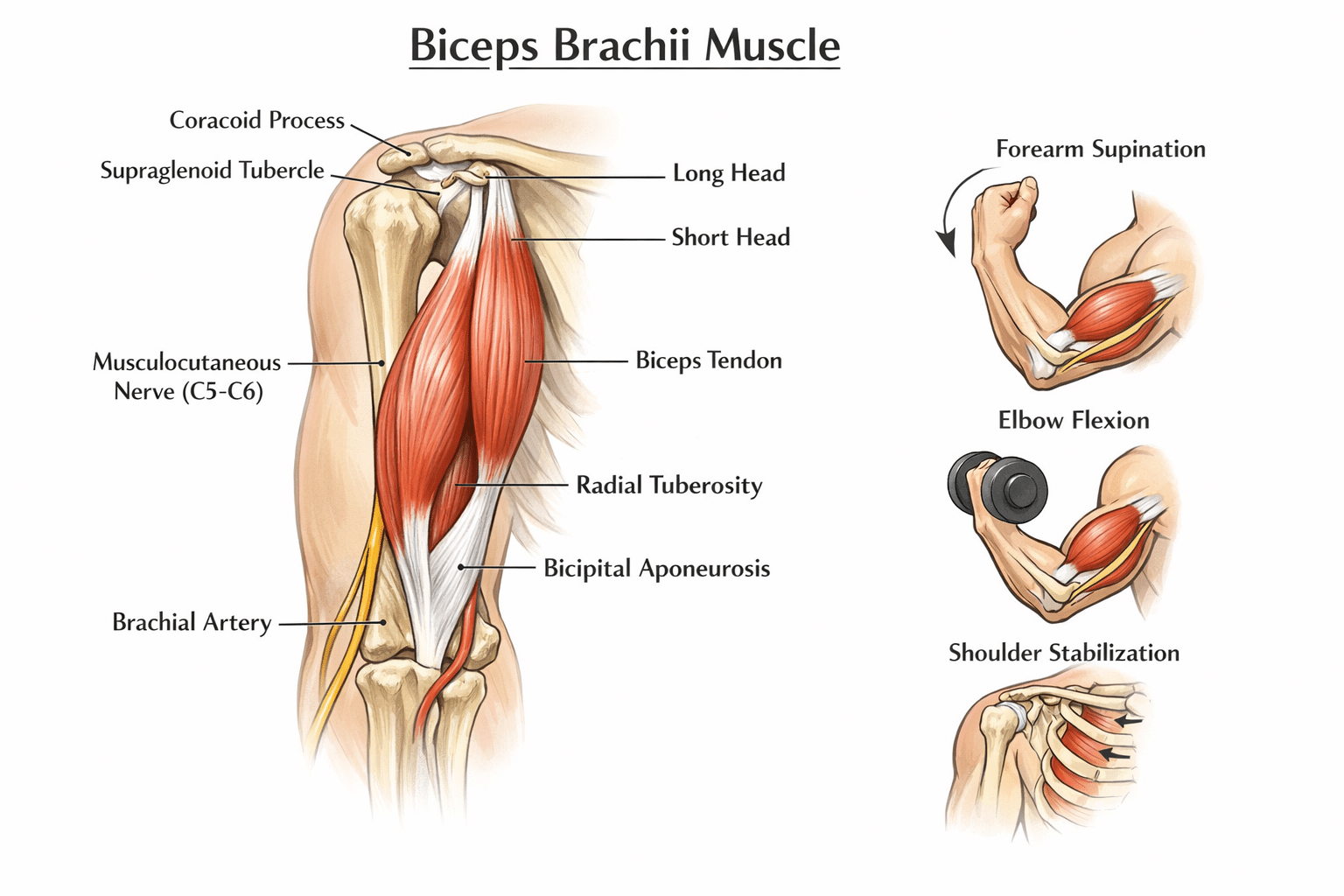
Long Head: This portion originates from the supraglenoid tubercle of your scapula (shoulder blade) and travels through the bicipital groove of your humerus (upper arm bone). The long head is primarily responsible for shoulder stability and contributes significantly to the bicep’s peak.
Short Head: Originating from the coracoid process of your scapula, the short head focuses more on elbow flexion and adds width to your bicep’s appearance.
Insertion and Connection Points
Both heads merge into a single tendon that inserts on the radial tuberosity of your forearm. Additionally, a fibrous expansion called the bicipital aponeurosis blends into your forearm fascia, providing additional strength and stability.
Nerve Supply and Blood Flow
Your biceps brachii receives innervation from the musculocutaneous nerve (C5-C6) and blood supply from branches of the brachial artery. This network ensures proper muscle function and recovery.
Primary Functions of the Biceps Brachii
Understanding these functions is crucial for selecting the right exercises:
- Forearm Supination: Your biceps is the primary and strongest supinator when your elbow is flexed
- Elbow Flexion: The classic “curling” motion that brings your hand toward your shoulder
- Shoulder Flexion Assistance: Helping lift your arm forward and upward
- Shoulder Joint Stability: The long head particularly contributes to anterior shoulder stability
The 7 Essential Biceps Brachii Exercises
These exercises are specifically chosen to target different aspects of your biceps brachii anatomy, ensuring comprehensive development.
1. Supinated Barbell Curls
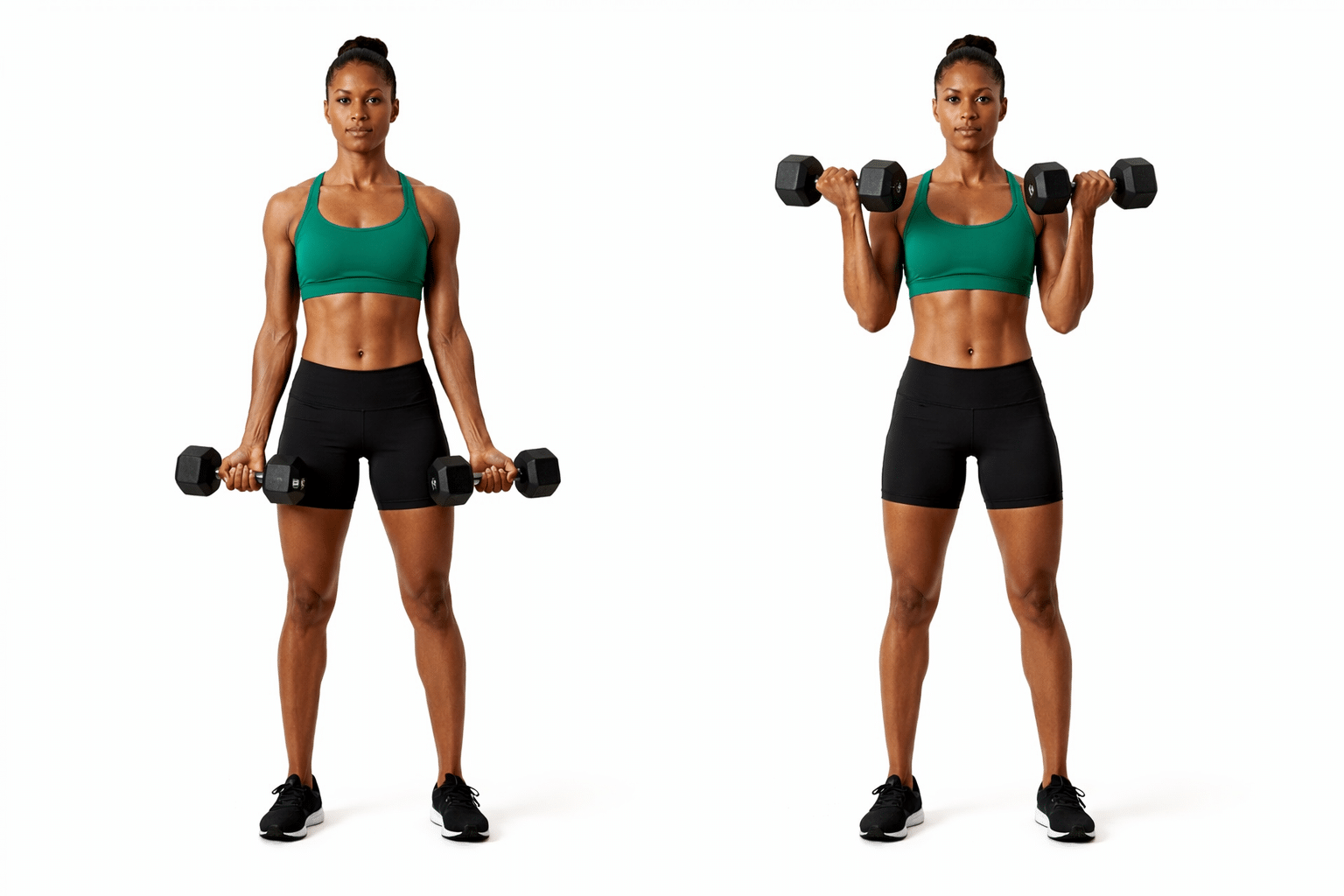
This foundational exercise maximizes bicep activation by utilizing the muscle’s primary supination function.
Execution: Stand with feet hip-width apart, holding a barbell with an underhand grip. Keep your elbows close to your sides and curl the weight up while focusing on the supination component. The biceps brachii is most effective as a flexor when the forearm is supinated, making this exercise incredibly powerful.
Anatomical Focus: Targets both heads equally while emphasizing the supination function.
2. Hammer Curls
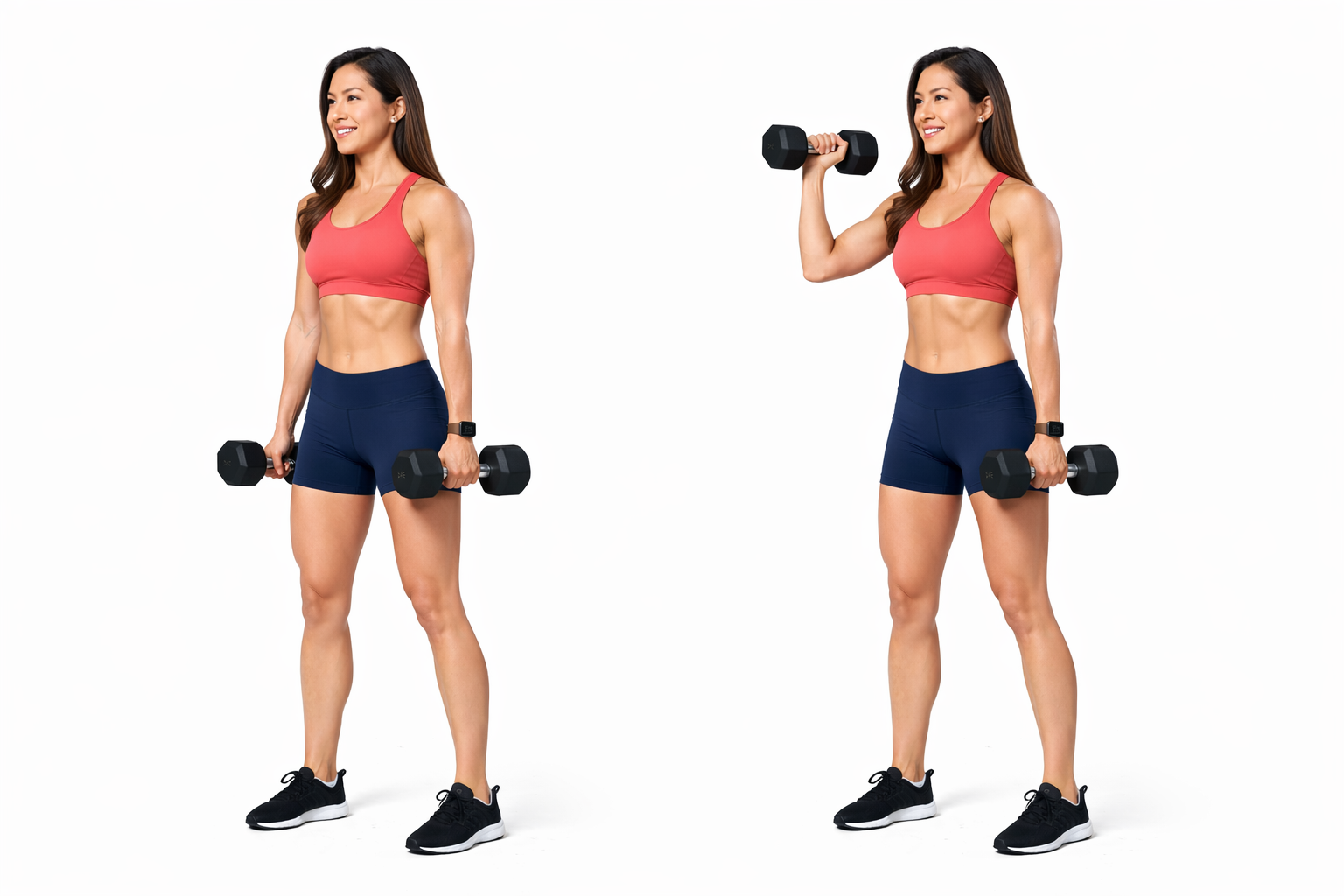
By maintaining a neutral grip, hammer curls challenge your biceps in a different plane of motion.
Execution: Hold dumbbells at your sides with palms facing inward. Curl the weights up while maintaining the neutral grip position. This exercise works in coordination with the brachialis and brachioradialis, as mentioned in anatomical studies.
Anatomical Focus: Emphasizes the long head while engaging supporting muscles.
3. Incline Dumbbell Curls
The inclined position stretches the long head of your biceps brachii, creating a unique training stimulus.
Execution: Set a bench to 45-60 degrees. Allow your arms to hang naturally, then curl the dumbbells with controlled motion. The stretch on the long head at the bottom position makes this exercise particularly effective.
Anatomical Focus: Primarily targets the long head due to shoulder extension.
4. Concentration Curls
This isolation exercise eliminates momentum and forces pure bicep contraction.
Execution: Sit on a bench with your elbow braced against your inner thigh. Curl the dumbbell with strict form, focusing on the peak contraction. The isolated position ensures maximum biceps brachii activation.
Anatomical Focus: Isolates both heads with emphasis on peak contraction.
5. Cable Curls with Supination
Cables provide constant tension throughout the range of motion while allowing natural supination.
Execution: Using a straight bar attachment, start with palms facing down and rotate to supinated position as you curl. This movement pattern mimics the natural function of forearm supination that makes your biceps most effective.
Anatomical Focus: Maximizes the supination function while maintaining tension.

6. Chin-ups (Supinated Grip)
This compound movement engages your biceps brachii in a functional, multi-joint pattern.
Execution: Hang from a bar with palms facing toward you, hands shoulder-width apart. Pull yourself up until your chin clears the bar. The supinated grip position optimizes bicep involvement while the long head contributes to anterior shoulder stability.
Anatomical Focus: Functional training of both heads plus shoulder stability.
7. Preacher Curls
The preacher bench position prevents cheating while providing a unique angle of resistance.
Execution: Position yourself on a preacher bench with your armpits at the top of the pad. Curl the weight with controlled motion, focusing on the stretch at the bottom and contraction at the top.
Anatomical Focus: Emphasizes the short head due to shoulder flexion position.
Tools and Supplies Needed
To perform these 7 exercises effectively, you’ll need specific equipment:
- Barbells: Olympic or standard barbell for foundational curls
- Dumbbells: Adjustable or fixed weight sets for versatile training
- Adjustable Bench: Essential for incline and concentration curls
- Preacher Bench: Specialized equipment for isolated training
- Cable Machine: Provides constant tension and various attachments
- Pull-up Bar: For functional compound movements
- Weight Plates: To progress your barbell exercises
For beginners, start with basic dumbbells and a simple bench. You can progress to more specialized equipment as your understanding of biceps brachii anatomy and training needs develop.
Common Mistakes to Avoid
Understanding these frequent errors will accelerate your progress and prevent injury:
Ignoring the Supination Component
Many beginners focus solely on elbow flexion while neglecting forearm supination. Since your biceps is the primary supinator when the elbow is flexed, incorporating this movement pattern is crucial for maximum activation.
Using Excessive Momentum
Swinging weights defeats the purpose of isolating your biceps brachii. The muscle works in coordination with the brachialis and brachioradialis, but proper isolation requires controlled movements.
Neglecting the Eccentric Phase
Lowering weights too quickly wastes half of each repetition’s muscle-building potential. The eccentric contraction is just as important as the concentric phase for anatomical development.
Poor Elbow Positioning
Allowing elbows to drift forward or backward changes the exercise mechanics and reduces bicep activation. Keep your elbows stable to maintain focus on the target muscle.
Incomplete Range of Motion
Partial repetitions limit muscle fiber recruitment. Full range of motion ensures both heads of your biceps brachii receive adequate stimulation, particularly important given their different origin points.
Expert Tips and Advice
These evidence-based strategies will maximize your anatomy-focused training:
Prioritize Mind-Muscle Connection
Focus intensely on feeling your biceps brachii contract during each repetition. This neurological connection, supported by research from the National Center for Biotechnology Information, significantly improves muscle activation and growth.
Vary Your Grip Width
Different grip positions emphasize different aspects of bicep anatomy. Wider grips tend to favor the short head, while closer grips may emphasize the long head more.
Progressive Overload with Anatomical Awareness
Increase resistance gradually while maintaining proper form. Understanding that your biceps works in coordination with supporting muscles helps you choose appropriate progression rates.
Include Both Isolation and Compound Movements
While isolation exercises target specific heads of your biceps brachii, compound movements like chin-ups provide functional strength that translates to real-world activities.
Recovery and Nutrition Considerations
Your biceps receives blood supply from branches of the brachial artery, making proper nutrition and recovery essential. Adequate protein intake and rest between sessions allow optimal adaptation.
Programming Your Biceps Brachii Training
Effective programming considers anatomical principles and recovery needs:
Weekly Training Frequency
Train your biceps 2-3 times per week, allowing at least 48 hours between sessions. The musculocutaneous nerve supply needs adequate recovery time between stimulation periods.
Exercise Selection Strategy
Include exercises that target both the long and short heads. Since the long head contributes to anterior shoulder stability, balance bicep training with posterior shoulder strengthening.
Repetition Ranges
Vary your rep ranges to stimulate different aspects of muscle development:
- 6-8 reps: Heavy loads for strength and neural adaptation
- 8-12 reps: Moderate loads for hypertrophy focus
- 12-15 reps: Higher volume for endurance and metabolic stress
Troubleshooting Your Progress
If you’re not seeing expected results, consider these anatomical factors:
Muscle Fiber Type Variations
Individual differences in muscle fiber composition affect training response. Some people respond better to higher volumes, while others need more intensity.
Biomechanical Considerations
Arm length and joint structure influence exercise effectiveness. According to the American College of Sports Medicine, understanding your biomechanics helps optimize exercise selection and form.
Neurological Adaptation
The musculocutaneous nerve’s adaptation to training stimuli takes time. Consistent progression over weeks and months yields better results than dramatic short-term changes.
Safety and Injury Prevention
Protecting your biceps brachii anatomy ensures long-term training success:
Warm-up Protocols
Always begin with light cardiovascular activity and dynamic stretching. The bicipital aponeurosis and surrounding fascia need gradual preparation for intense training.
Listen to Your Body
Pay attention to unusual pain, particularly in the bicipital groove area where the long head tendon travels. Early intervention prevents serious injuries.
Balanced Training Approach
Since your biceps assists in shoulder flexion, ensure balanced development with opposing muscle groups. This prevents muscular imbalances that can lead to injury.
Conclusion: Your Path to Anatomically-Informed Bicep Training
Understanding your biceps brachii anatomy transforms random gym sessions into strategic, results-driven workouts. These 7 essential exercises target every aspect of your bicep’s structure and function, from the supraglenoid tubercle origins to the radial tuberosity insertion.
Remember that your biceps is most effective as a flexor when the forearm is supinated, and it works in coordination with the brachialis and brachioradialis. The long head’s contribution to anterior shoulder stability makes balanced training even more important.
Start with proper form using lighter weights, then progressively increase resistance as your understanding of movement patterns improves. Focus on the mind-muscle connection, avoid common mistakes, and trust the process of anatomically-informed training.
Your journey to impressive bicep development begins with this knowledge. Apply these principles consistently, and you’ll finally achieve the muscle definition and strength you’ve been seeking. The science-backed approach outlined here gives you everything needed to transform your training from guesswork into precision.