


If you’re new to strength training, hammer curls for beginners represent one of the most effective and accessible arm exercises you can master. This fundamental movement targets your biceps and forearms while being gentle on your joints, making it perfect for those just starting their fitness journey.
Unlike traditional bicep curls, hammer curls maintain a neutral grip that feels more natural and reduces wrist strain. This exercise builds functional strength that translates to everyday activities like carrying groceries or lifting objects overhead.
Let’s explore the 10 essential form elements that will help you master hammer curls safely and effectively from day one.
Understanding Hammer Curls: The Foundation
Hammer curls get their name from the grip position, which mimics holding a hammer. This neutral grip position targets the brachialis muscle more effectively than regular curls while still engaging the biceps brachii and brachioradialis.
For beginners, this exercise offers several advantages over other bicep movements. The neutral grip feels more comfortable, places less stress on the wrists, and allows most people to use slightly heavier weights than traditional curls.
The movement is straightforward: you lift dumbbells from your sides to shoulder height while keeping your palms facing each other throughout the entire range of motion.
Essential #1: Starting Position Setup
Proper stance forms the foundation of effective hammer curls for beginners. Stand with your feet hip-width apart, maintaining a slight bend in your knees. Your core should be engaged, and your chest should be up with shoulders pulled back.
Hold a dumbbell in each hand with your arms hanging naturally at your sides. Your palms should face your body (neutral grip), and your shoulders should be directly over your hips. This alignment ensures optimal muscle activation and reduces injury risk.
Avoid leaning forward or backward, as this can compromise the exercise’s effectiveness and place unnecessary stress on your lower back.
Essential #2: Maintaining Neutral Wrist Alignment
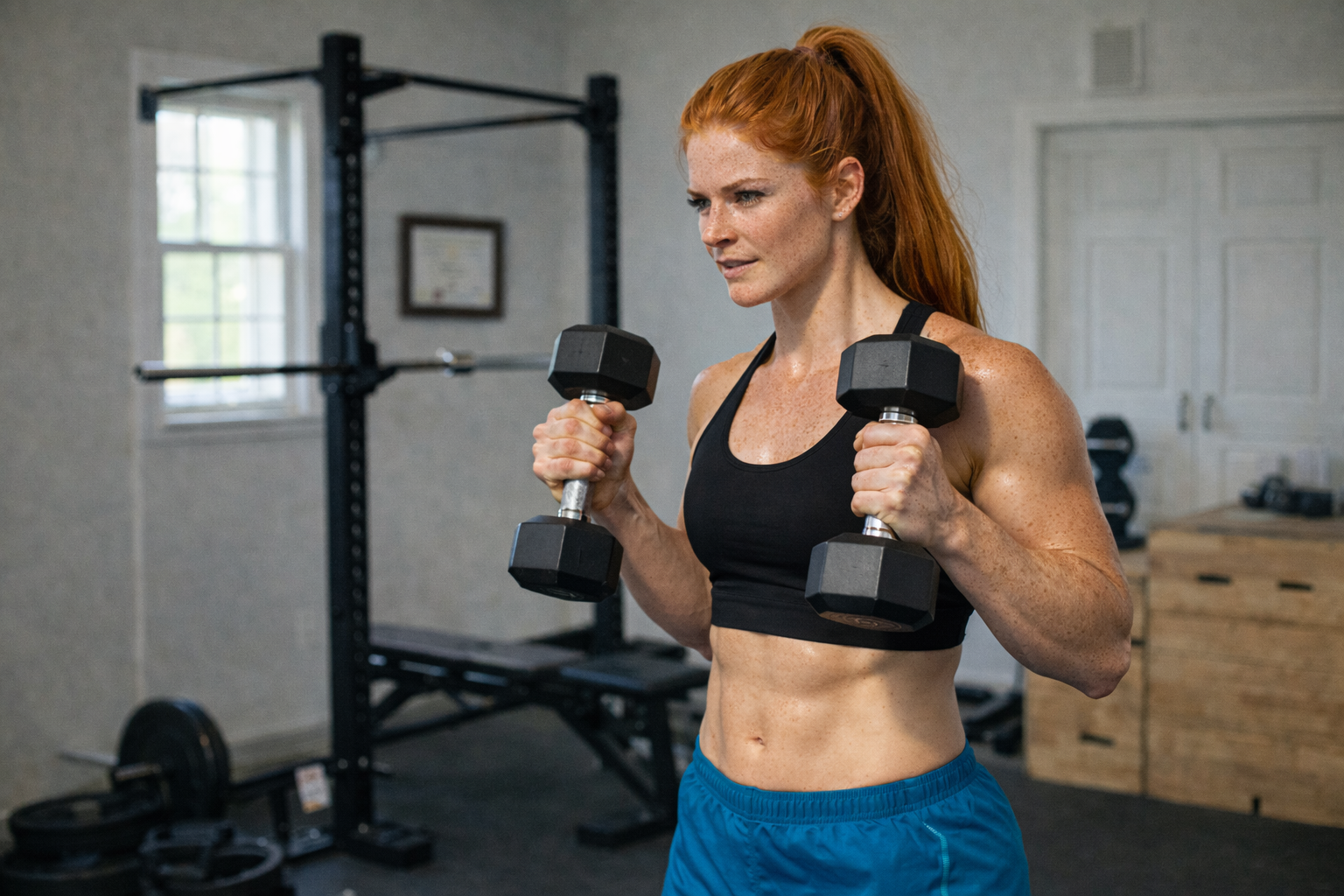
One of the biggest advantages of hammer curls for beginners is the neutral wrist position. Throughout the entire movement, your wrists should remain straight and aligned with your forearms.
Avoid flexing or extending your wrists during the lift. Keep them in the same position as if you were shaking hands with someone. This alignment maximizes muscle engagement while minimizing joint stress.
If you notice your wrists bending during the exercise, you may be using weights that are too heavy. Reduce the load until you can maintain proper alignment throughout the full range of motion.
Essential #3: Elbow Positioning and Control
Your elbows should remain stationary throughout the hammer curl movement. Keep them close to your sides and slightly in front of your torso, never allowing them to drift forward or backward.
Think of your elbows as hinges that only move in one direction. The only movement should come from your forearms rotating around your elbow joint. This isolation ensures maximum muscle activation in your target muscles.
Common mistakes include swinging the elbows forward to generate momentum or allowing them to flare out to the sides, which reduces the exercise’s effectiveness.
Essential #4: Controlling the Eccentric Phase
The lowering portion of hammer curls for beginners is just as important as the lifting phase. Control the descent by taking 2-3 seconds to lower the weight back to the starting position.
This controlled eccentric movement maximizes muscle fiber recruitment and promotes greater strength gains. Resist the urge to let gravity do the work by dropping the weights quickly.
According to research from the American College of Sports Medicine, emphasizing the eccentric phase can lead to greater muscle hypertrophy and strength improvements, especially for beginners.
Essential #5: Proper Breathing Patterns
Coordinated breathing enhances performance and safety during hammer curls. Exhale as you lift the weight (concentric phase) and inhale as you lower it (eccentric phase).
This breathing pattern helps maintain core stability and provides oxygen to working muscles. Avoid holding your breath, which can cause dangerous spikes in blood pressure.
For beginners, focusing on breathing also helps maintain rhythm and prevents rushing through the exercise too quickly.

Essential #6: Selecting Appropriate Starting Weights
Choosing the right weight is crucial for hammer curls for beginners. Start with dumbbells that allow you to complete 8-12 repetitions with perfect form while feeling challenged on the last 2-3 reps.
Most beginners should start with 10-20 pound dumbbells, though this varies based on individual strength levels. Women typically start with 8-15 pounds, while men often begin with 15-25 pounds.
Remember, it’s better to start too light than too heavy. You can always increase the weight as you develop proper form and strength.
Essential #7: Understanding Full Range of Motion
Complete range of motion maximizes muscle development and joint health. Begin with your arms fully extended (but not locked out) and curl the weights until your forearms are nearly vertical.
At the top of the movement, your biceps should be fully contracted, but avoid excessive squeezing that could cause cramping. The peak contraction occurs when your forearms are perpendicular to the floor.
Avoid partial repetitions or stopping short of full extension, as this limits muscle development and can create strength imbalances over time.
Essential #8: Recovery Time Guidelines
Adequate recovery is essential for muscle growth and preventing overuse injuries. Allow 48-72 hours between hammer curl training sessions to give your muscles time to repair and grow stronger.
Beginners often make the mistake of training the same muscle groups daily, which can lead to overtraining and decreased performance. Your muscles grow during rest periods, not during the actual workout.
Signs you need more recovery time include persistent muscle soreness, decreased performance, or feeling weaker than in previous sessions.
Essential #9: Progressive Overload Principles
Knowing when to progress ensures continued improvement in your hammer curls for beginners routine. Increase weight by 2.5-5 pounds when you can complete all sets with perfect form and feel like you could do 2-3 additional repetitions.
Other progression methods include increasing repetitions, adding extra sets, or slowing down the tempo. The key is gradual, consistent advancement rather than dramatic jumps in difficulty.
Track your workouts to monitor progress objectively. This helps you make informed decisions about when and how to advance your training.
Essential #10: Building a Strong Foundation
Master the basic hammer curl before attempting variations or advanced techniques. Consistency with proper form builds the movement patterns and strength base necessary for future progression.
Focus on quality over quantity during your first 4-6 weeks of training. This foundation period establishes good habits and reduces injury risk as you advance to more challenging exercises.
Consider working with a qualified trainer initially to ensure you’re performing the movement correctly and safely.
Common Mistakes to Avoid
Several common errors can compromise your hammer curls for beginners and increase injury risk. Using momentum by swinging your body or arms reduces muscle activation and can strain your lower back.
Rushing through repetitions prevents proper muscle engagement and limits strength gains. Each repetition should be deliberate and controlled, focusing on the muscles you’re trying to develop.
Other frequent mistakes include:
- Allowing elbows to drift away from your sides
- Using weights that are too heavy for proper form
- Neglecting the eccentric (lowering) phase
- Holding your breath during the exercise
- Training the same muscles on consecutive days
Expert Tips for Success
Several proven strategies can accelerate your progress with hammer curls for beginners. Focus on mind-muscle connection by consciously thinking about the muscles you’re working during each repetition.
Warm up properly before training with 5-10 minutes of light cardio and dynamic stretching. This preparation increases blood flow and reduces injury risk.
Consider these additional tips:
- Start each workout with compound movements before isolation exercises
- Keep a training log to track weights, sets, and repetitions
- Stay hydrated throughout your workout
- Listen to your body and rest when needed
- Gradually increase training volume over time
Programming Hammer Curls Into Your Routine
For beginners, 2-3 sets of 8-12 repetitions performed twice per week provides an excellent starting point. This frequency allows adequate recovery while providing enough stimulus for strength and muscle development.
Hammer curls work well as part of an upper body routine or on arm-focused training days. They complement other bicep exercises like traditional curls and can be paired with tricep exercises for balanced arm development.
As recommended by the National Strength and Conditioning Association, beginners should focus on learning proper form with moderate weights before advancing to more intensive training protocols.
Conclusion: Your Hammer Curl Journey
Mastering these 10 essential form elements will set you up for success with hammer curls for beginners. Remember that consistency and proper technique matter more than the amount of weight you lift, especially during your first few months of training.
Start conservatively, focus on perfect form, and gradually progress as your strength and confidence improve. With patience and dedication, hammer curls will become a valuable tool in building stronger, more defined arms.
Take time to practice each element individually before putting them all together. Your future self will thank you for building this solid foundation from the beginning of your fitness journey.