Understanding the extension definition is crucial for anyone interested in fitness, physical therapy, or simply maintaining healthy movement patterns. Whether you’re a beginner starting your fitness journey or recovering from an injury, grasping this fundamental concept will help you move better and exercise more effectively.
Joint extension is one of the most basic yet important movements your body performs daily. From standing up from a chair to reaching for something on a high shelf, extension movements are everywhere in our daily activities.
What Is Extension? The Basic Definition
In anatomical terms, extension definition refers to the straightening or increasing of the angle between two body parts at a joint. When you extend a joint, you’re moving the bones away from each other, creating a larger angle between them.
Think of extension as the opposite of bending or flexion. When you straighten your arm from a bent position, you’re performing extension at the elbow joint. When you stand up straight from a crouched position, you’re extending at multiple joints including your hips and knees.
This movement occurs in what’s called the sagittal plane, which divides your body into left and right halves. Extension typically moves body parts backward or straightens them from a flexed position.
Understanding Major Joints and Extension Movements
The Hip Joint
Hip extension is one of the most powerful movements in the human body. When you extend your hip, you’re moving your thigh backward relative to your pelvis. This movement is essential for walking, running, climbing stairs, and standing up from seated positions.
The primary muscles responsible for hip extension include the gluteus maximus, hamstrings, and parts of the adductor magnus. Strong hip extension is crucial for athletic performance and daily functional movements.
The Knee Joint
Knee extension involves straightening the leg at the knee joint. This movement is powered primarily by the quadriceps muscles group, which includes four distinct muscles on the front of your thigh.
Proper knee extension is vital for activities like walking, jumping, and getting up from chairs. Weakness in knee extension can lead to functional limitations and increased injury risk.
The Elbow Joint
Elbow extension straightens the arm and is primarily controlled by the triceps muscle group. This movement is essential for pushing motions, reaching overhead, and many upper body exercises.
Understanding elbow extension is particularly important for anyone involved in sports that require throwing, pushing, or overhead movements.
The Shoulder Joint
Shoulder extension moves the arm backward from the anatomical position. While less commonly discussed than other shoulder movements, shoulder extension plays a crucial role in swimming strokes, throwing motions, and certain strength training exercises.
The Spine
Spinal extension involves arching the back backward, creating a curve that opens the front of the body. This movement is important for posture and counteracting the forward head and rounded shoulder posture common in modern life.
According to the Physiopedia, proper understanding of spinal extension is crucial for maintaining healthy posture and preventing back injuries.
The Ankle Joint
Ankle extension, also called plantarflexion, involves pointing the foot downward. This movement is essential for walking, running, jumping, and maintaining balance during various activities.
Common Extension-Related Injuries
Understanding extension movements helps identify and prevent common injuries that can occur when these movements are compromised or performed incorrectly.
Hip Extension Injuries
Poor hip extension can lead to lower back pain, as the spine often compensates for limited hip mobility. Tight hip flexors, which are the opposing muscles to hip extensors, can create this limitation.
Hamstring strains are also common when hip extension is performed with poor form or inadequate warm-up, particularly during explosive movements like sprinting.
Knee Extension Problems
Weakness in knee extension muscles can contribute to patellofemoral pain syndrome and increase the risk of ACL injuries. This is particularly concerning for athletes participating in sports involving jumping and cutting movements.
Quadriceps muscle imbalances can also lead to tracking problems of the kneecap, causing pain and dysfunction during extension movements.
Elbow Extension Issues
Tennis elbow and golfer’s elbow can affect extension movements, causing pain and limiting the ability to straighten the arm fully. These conditions often result from overuse or repetitive stress.
Spinal Extension Injuries
Excessive spinal extension can lead to compression injuries of the vertebrae and surrounding structures. This is particularly relevant for activities like gymnastics, dancing, and certain weight lifting movements.
Rehabilitation and Extension Exercises
Rehabilitation focusing on extension movements is crucial for recovery from many injuries and for maintaining optimal joint function. The approach typically involves a progressive sequence of exercises designed to restore normal movement patterns.
Phase 1: Pain Management and Gentle Movement
Initial rehabilitation focuses on reducing pain and inflammation while maintaining gentle range of motion. This might include passive extension exercises where a therapist or device moves the joint through its range without active muscle contraction.
Phase 2: Active Range of Motion
As pain subsides, active extension exercises are introduced. These movements are performed by the individual’s own muscle power, helping to restore normal movement patterns and begin strengthening the involved muscles.
Phase 3: Strengthening and Functional Training
The final phase involves progressive strengthening exercises and functional movement training. This prepares the individual to return to their normal activities and reduces the risk of re-injury.
Research from the National Center for Biotechnology Information emphasizes the importance of progressive loading in rehabilitation programs to achieve optimal outcomes.
6 Essential Extension Exercises for Beginners
These fundamental exercises help strengthen extension movements and can be easily performed by beginners with proper instruction and progression.
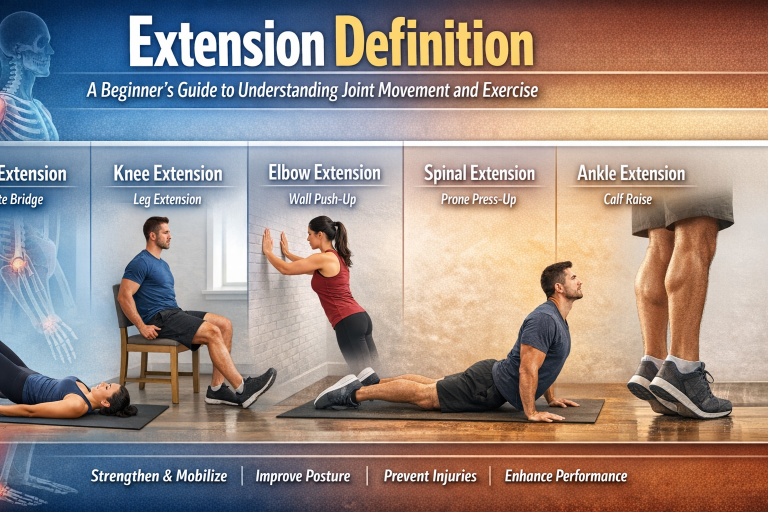
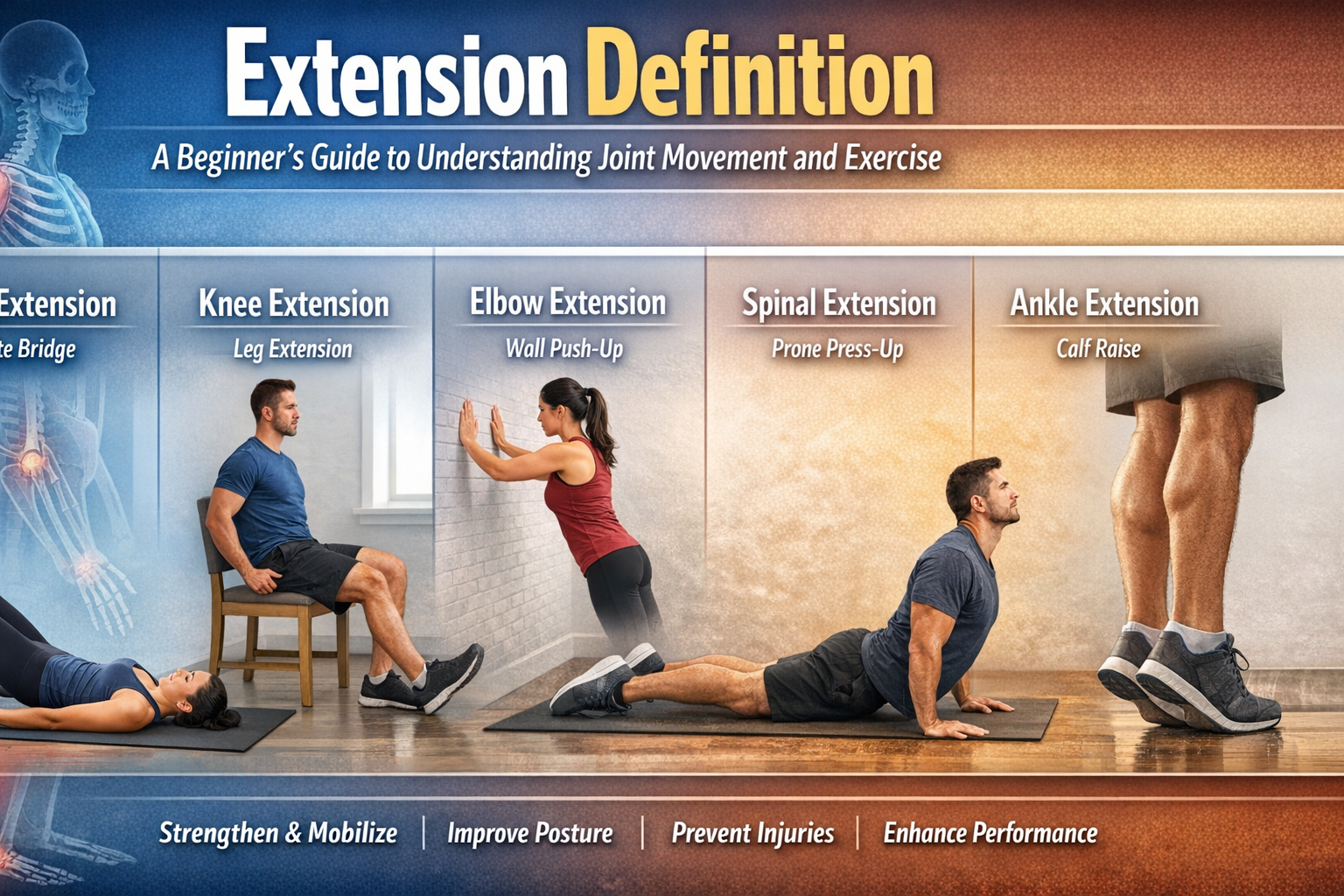
1. Hip Extension: Glute Bridge
Lie on your back with knees bent and feet flat on the floor. Squeeze your glutes and lift your hips up, creating a straight line from knees to shoulders. Hold for 2-3 seconds before lowering slowly.
Start with 2 sets of 10-15 repetitions. This exercise strengthens the glutes and hamstrings while improving hip extension mobility.
2. Knee Extension: Seated Leg Extension
Sit in a chair with your back straight. Slowly straighten one leg in front of you, hold for 2-3 seconds, then lower slowly. This can be done with or without ankle weights for added resistance.
Perform 2 sets of 10-12 repetitions on each leg. This exercise specifically targets the quadriceps muscles responsible for knee extension.
3. Elbow Extension: Wall Push-Up
Stand arm’s length from a wall with feet hip-width apart. Place hands flat against the wall at shoulder height. Lean in toward the wall, then push back to starting position.
Complete 2 sets of 8-12 repetitions. This modified push-up is perfect for beginners to strengthen triceps and practice elbow extension.
4. Spinal Extension: Prone Press-Up
Lie face down on the floor with hands under your shoulders. Gently press up, lifting your chest while keeping your hips on the ground. Hold for 5-10 seconds before lowering.
Start with 2 sets of 5-8 repetitions. This exercise helps counteract forward posture and strengthens the muscles responsible for spinal extension.
5. Ankle Extension: Calf Raise
Stand with feet hip-width apart, holding onto a wall or chair for balance if needed. Rise up onto your toes by pushing through the balls of your feet, then lower slowly.
Perform 2 sets of 12-15 repetitions. This exercise strengthens the calf muscles responsible for ankle extension and improves balance.
6. Multi-Joint Extension: Squat to Stand
Start in a seated position in a chair. Stand up without using your hands, focusing on straightening your hips and knees simultaneously. Sit back down slowly.
Complete 2 sets of 8-10 repetitions. This functional exercise combines hip and knee extension while mimicking daily activities.
Common Mistakes to Avoid
Understanding proper extension technique is crucial for preventing injury and maximizing the benefits of your exercises and rehabilitation efforts.
Hyperextension
One of the most common mistakes is extending joints beyond their normal range of motion. This can put excessive stress on ligaments and joint structures, potentially leading to injury. Always move within a comfortable, controlled range of motion.
Compensatory Movements
When one joint has limited extension, other joints often compensate by moving more than they should. For example, limited hip extension might cause excessive spinal extension, potentially leading to back pain.
Ignoring Opposing Muscles
Focusing only on extension exercises while neglecting flexibility of opposing muscle groups can create imbalances. Tight hip flexors, for instance, can limit hip extension no matter how strong your glutes become.
Progressing Too Quickly
Attempting to perform advanced extension exercises before mastering the basics can lead to poor form and increased injury risk. Always progress gradually and master fundamental movements first.
Neglecting Eccentric Control
Many people focus on the extending phase of movement but neglect the controlled lowering or lengthening phase. This eccentric control is crucial for joint stability and injury prevention.
Tips and Advice for Improving Extension Movements
Developing better extension movements requires a comprehensive approach that addresses both strength and mobility factors.
Start with Mobility
Before strengthening extension movements, ensure you have adequate flexibility in opposing muscle groups. Tight hip flexors will limit hip extension regardless of how strong your glutes are. Include regular stretching in your routine.
Focus on Quality Over Quantity
Perfect form with fewer repetitions is always better than poor form with higher repetitions. Take time to learn proper movement patterns before increasing intensity or volume.
Use Progressive Loading
Gradually increase the difficulty of your extension exercises. This might involve adding resistance, increasing range of motion, or progressing to more challenging exercise variations.
Practice Daily Functional Movements
Incorporate extension movements into your daily routine. Focus on standing up from chairs without using your hands, maintaining good posture while walking, and performing household tasks with proper body mechanics.
Listen to Your Body
Pay attention to how your body responds to extension exercises. Some muscle soreness is normal, but sharp pain or persistent discomfort may indicate improper form or the need to modify your approach.
Stay Consistent
Regular practice is key to improving extension movements. Even 10-15 minutes of daily extension exercises can lead to significant improvements in strength and mobility over time.
Conclusion
Understanding the extension definition and its practical applications is fundamental for anyone interested in movement, fitness, or injury prevention. Extension movements are essential for daily activities and athletic performance, making them crucial components of any comprehensive exercise program.
By focusing on proper technique, avoiding common mistakes, and following progressive exercise programs, beginners can safely develop stronger, more functional extension movements. Remember that improvement takes time and consistency, so be patient with your progress and always prioritize proper form over intensity.
Whether you’re recovering from an injury, starting a fitness program, or simply wanting to move better in daily life, mastering extension movements will serve as a strong foundation for your movement journey. Start with the basic exercises outlined in this guide, progress gradually, and don’t hesitate to seek professional guidance when needed.